Start from the goods, not from the bag you have open
Packaging Suppliers is the materials around the carton: film, paper, envelopes and fill. A mailroom that sends soft goods has three honest choices. A mailing bag is a polythene pack for something that can flex. A padded envelope is a bag with a cushion already in the walls. Kraft paper is a wrap, not a bag, and it needs an outer if the goods still need one. Picking whichever is nearest the bench is how a book gets creased in a mailer, or how a t-shirt gets a padded envelope it did not need.
Ask three questions. Can the goods bend without damage? Do they have a face that must not be knocked? Must they stay flat? Soft clothing can bend. A paperback that must stay square should not. A document that must not crease needs board, not film. The rest of this guide is those three answers turned into a range you can open.
A mailing bag when the goods are soft
Grey mailing bags are described as opaque polythene, also called shoe bags, European manufactured from a blend of recycled film and 100% recyclable. They suit soft goods. They do not have rigid walls, so a corner that must stay sharp will not stay sharp. The mailing bags guide and the mailing bags category are that line. Poly mailers are the related film pack, covered in poly mailers, for the same kind of soft dispatch when a carton would be empty air.
Choose the bag by the goods, with a little room to close the lip, not a bag twice as long because it was the size in the drawer. A bag that is far too big lets the goods move and can push a postal size up. If the bag is going as a Royal Mail small parcel, the outside of the filled bag is what is measured. Our changes page gives the current small parcel maximum as 450 mm long, 350 mm wide and 160 mm deep. A soft bag can be under that and still be the wrong pack if the contents are crushed. The size limit does not add protection.
A padded envelope when the face needs a cushion
Jiffy and Arofol bubble envelopes are the lined bags. The category says we are authorised Jiffy distributors, stocking Jiffy Airkraft, plus Arofol in gold and white. That cushion is in the wall of the envelope. It is the right pack for a single item that needs a bit of give and does not need a carton: a small boxed product, a slim breakable, something that would rattle in a plain mailer. It is still not a carton. A heavy item, or a set of items that must not touch each other, belongs in a box with fill.
Open Jiffy and bubble envelopes and the padded envelopes guide, and match the size to the item. Board-back envelopes, in papers and envelopes, are the rigid paper pack for documents that must not crease. A mailer, a padded bag and a board-back envelope are three levels. The softest goods take the mailer. A book that must stay flat takes board. The padded envelope is the middle, where the risk is a knock rather than a crease or a fold.
Kraft when you are wrapping, not bagging
Kraft paper rolls are described as ribbed, machine glazed and 88 gsm, for wrapping parcels. The eco-friendly page also describes them as recycled kraft. You wrap the goods, then you still need an outer if the parcel needs one. Kraft is the layer against crockery, the interleaving in a carton, the wrap for an awkward shape. It is not a mailing bag and it is not tape. Kraft paper tape is a different product: it seals a carton. Do not try to wrap a parcel in tape, and do not try to seal a carton with a sheet of wrapping paper.
The kraft paper guide and the rolls and sheets are the wrapping line. Use it when the goods need a paper surface against them, then put that wrap inside a carton or, if the goods are only being covered for handling, stop there. A mailroom that uses kraft as the outer for everything will crease the things that needed a bag and under-protect the things that needed board.
Bags that are not outward mail
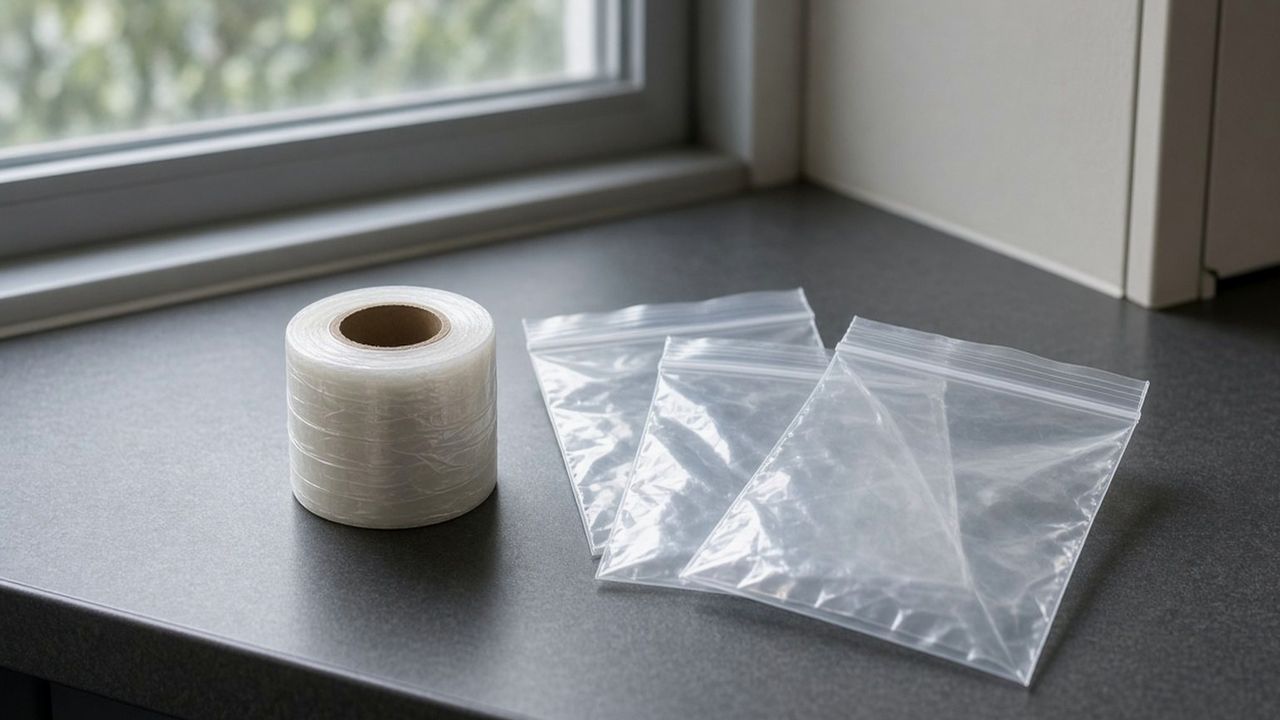
Grip seal bags and clear food bags are listed for food and for small parts, not as a substitute for a mailing bag. Grip seal bags and clear food bags have their own guide. A grip seal bag inside a mailer is a sensible way to keep a small part together. A grip seal bag as the only outer for a postal parcel is not the mailing range. Carrier bags and refuse sacks are shop and waste lines. They are not padded, and they are not opaque mailing bags.
Void fill is the other supply that sits beside these packs. If you did choose a carton because the goods needed walls, the empty space still needs fill. Loose fill and paper void fill are separate from the mailer. A mailroom that only stocks bags will eventually pack a rigid item badly. A mailroom running low is about noticing which of these lines is about to run out, because they do not run out on the same day.
Ordering the three as one delivery
Bags, envelopes and paper can share an order. Orders placed by 3pm are dispatched the same day. The aim in the terms is delivery by 5.30pm the next working day, with a 1 to 3 day courier also described, depending on the lines. UK delivery is free over £50 ex VAT. A top-up of one envelope size under that figure still leaves. It is not held back.
Trade businesses that reorder the same sizes can apply for TradePro. It starts at 5% off and goes up to 10% over £1,000 a month, with BACS as well as card and PayPal. The account does not change which pack the goods need. Write the three choices on the bench, in the words of the goods, and reorder the size that matched. The mailroom collects the shorter notes on these lines.