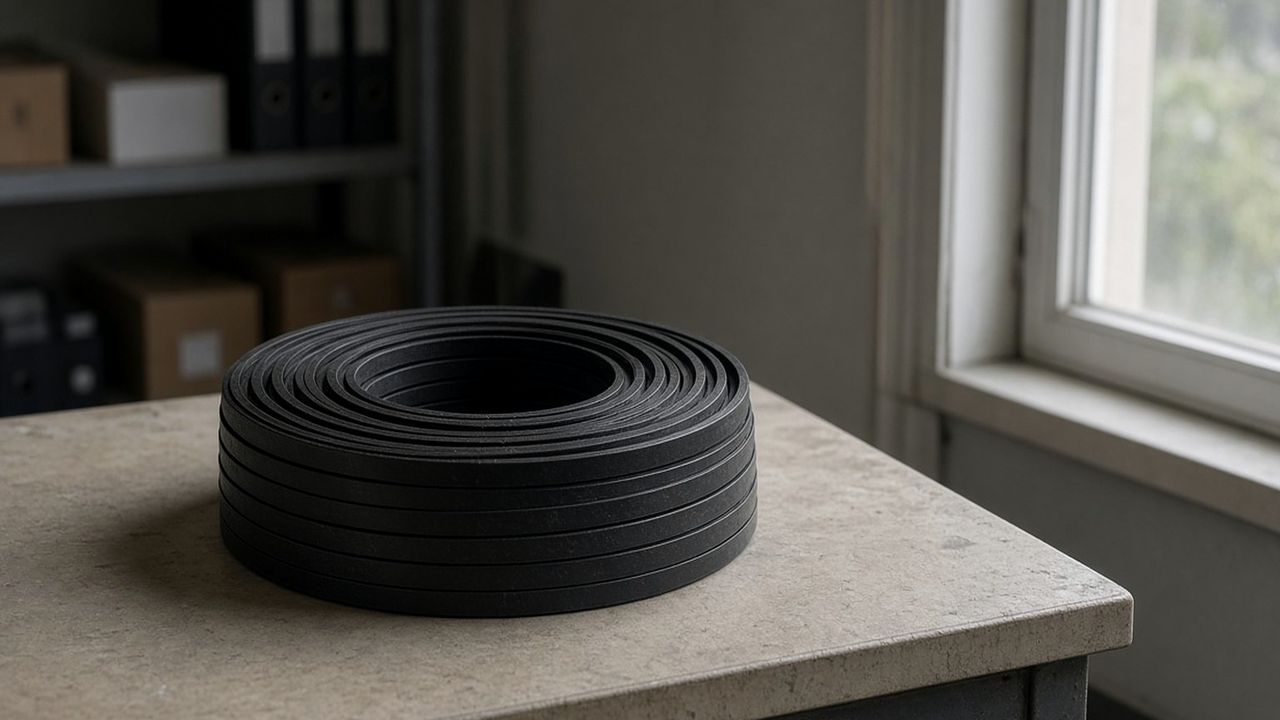
A mailroom on this site is bags, envelopes and paper, not a wall of cartons. The goods decide the pack. The shelf decides the reorder.
A mailer, an envelope, or paper is the choice. A mailroom running low is the shortage. This topic holds both, and the ranges they point at.
Three packs, three questions
Can the goods bend? Does a face need a cushion? Must they stay flat? Soft clothing can take a mailing bag: opaque polythene, also called a shoe bag, European made from a blend of recycled film and described as 100% recyclable. A small item that must not be knocked takes a padded envelope. We are authorised Jiffy distributors, stocking Jiffy Airkraft and Arofol in gold and white, in Jiffy and bubble envelopes. A document that must not crease takes a board-back envelope from papers and envelopes. Kraft, 88 gsm, ribbed and machine glazed, is a wrap, in rolls and sheets. It is not a bag and it is not tape.
Mailing bags, padded envelopes, poly mailers and kraft paper are the longer notes. Grip seal bags and clear food bags are a different job again. They hold a small part or a food line. They are not the outer for a postal parcel. Carrier bags and refuse sacks are not outward mail either. What a packaging supplier stocks is the wider shelf if the mailroom is only part of what you buy.
A bag that is far too big lets the goods move and can change the postal size. The outside of a filled pack is what is measured if it is a Royal Mail small parcel: 450 × 350 × 160 mm on our changes page. The limit does not add a cushion. A mailer that meets the limit can still crush a book. Choose the pack first, then the size, then check the outside.
Each shelf has its own minimum
Bags run out size by size. A cupboard of large mailers does not rescue a medium that has gone. Envelopes run out size by size as well, and a switch to plain mailers because the padded size is gone means the fragile line is being under-packed. Kraft is low when the roll will not finish the wrapping, not when someone is “making the core last”. Write the minimum on the shelf. When the count meets it, that line alone goes on the order.
Do not reorder every line because one is low, and do not wait until all three are low because that feels like a proper order. UK delivery is free over £50 ex VAT. Under that, the order still leaves. A mailroom running low describes the signals, including the expensive one: somebody improvising a pack because the right shelf is empty.
Orders placed by 3pm leave the same day. The aim is 5.30pm the next working day, with a 1 to 3 day courier also described. Friday aims for Monday. The minimum has to sit high enough that this spread still arrives before zero. A shortage discovered on Friday afternoon is a bare Monday. TradePro, for a business that repeats the sizes, starts at 5% and goes to 10% over £1,000 a month, with BACS. It does not pick the size. A size that has not moved for a month comes off the standing order.
When the goods needed a carton after all
Some items in a mailroom are rigid. They need walls and, if the carton is not a perfect fit, fill. That is a different range from the bag. Using a carton because the bags ran out is a shortage. Using a carton because the goods have corners is a correct pack, and it should be written down as such so the next person does not “save money” with a mailer. Void fill and paper void fill are the gap. Bubble is the face. They are supplies too, and they have their own minimums if you use them every day.
Kraft tape seals a carton. Kraft paper wraps a parcel. Ordering the roll when the seal has run out, or the tape when the wrap has run out, is the mix-up the shelf labels are there to stop. Papers and envelopes stays the document line. Do not let it become a home for every paper product.
Stocked items can be returned within 14 days if the top-up was the wrong size. Call and arrange it. Order the quantity that restores the minimum, not a year of a size you have only just named. Once a week, look at the three shelves before the inbox. The goods have not changed. The count has. This topic is that habit, with the guides on one side and the ranges on the other.
Writing the choice where the packer stands
A guide on a website does not help if the only copy is in a buyer’s inbox. Put the three questions next to the bench, in the words of your own goods: this shirt is a mailer, this mug is a padded envelope, this print is board or a wrap plus a carton. A mailer, an envelope, or paper is the reasoning. The card on the bench is the answer for the things you send every day. New goods get the questions again. Old goods should not be re-decided by whoever is on shift.
When a new size of bag is added, give it the same minimum treatment as the old one, or you will discover it by running out. When a size is retired, take it off the shelf label so it is not reordered out of habit. Mailing bags and padded envelopes describe the ranges. They do not know which of your sizes is dead. You do, because you can see the dust.
The mailroom is in good shape when a Friday top-up is boring: the same sizes, the same paper, maybe an envelope, placed before 3pm, arriving in time for the shelf never to hit zero. Excitement in a mailroom is usually a shortage. The mailroom is this page so that boredom is the aim, and the ranges are one click away when a genuinely new product shows up.